
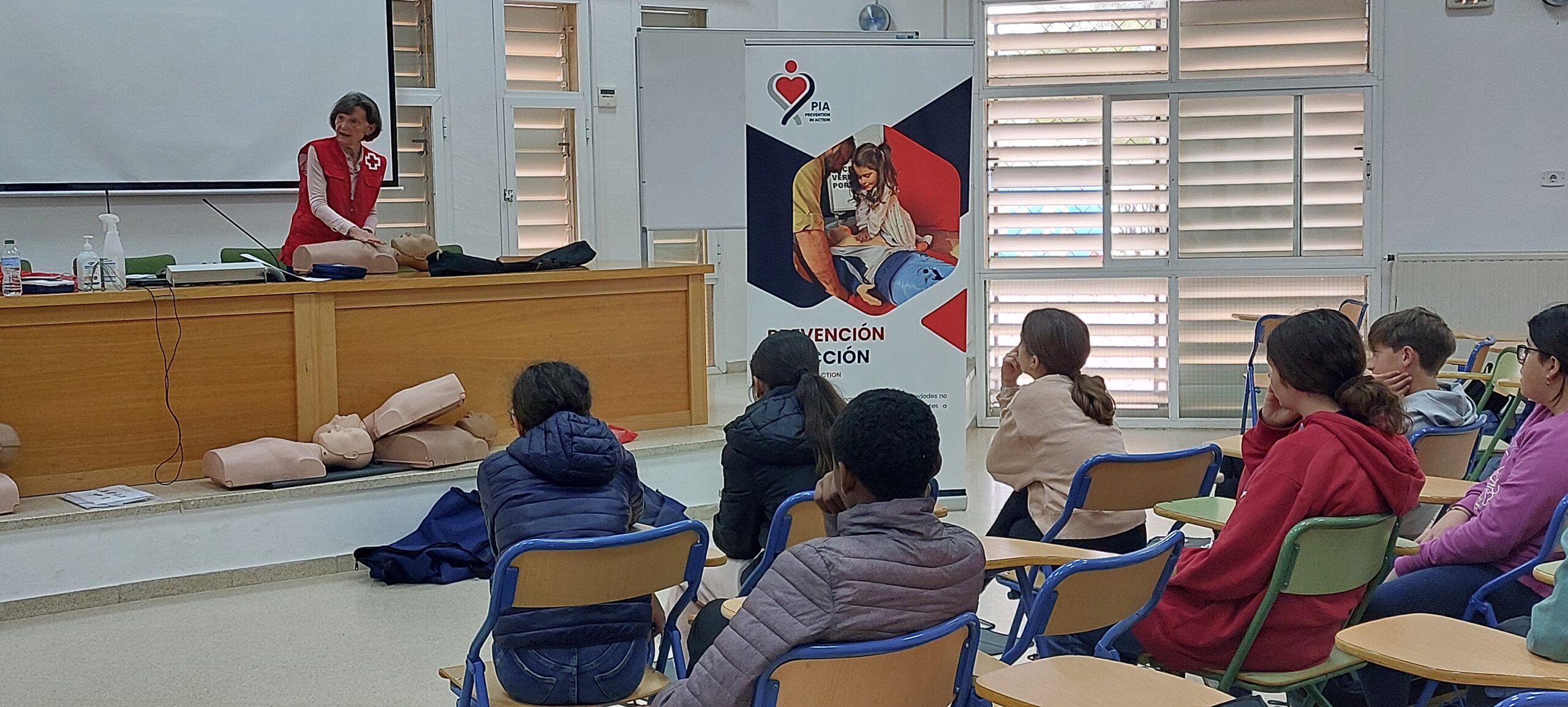
As part of the PIA Project’s implementation in Spain, a technical team member from Madrid shared their experience, highlighting challenges, community response, and key lessons learned. Check out the interview.
- What was the biggest challenge when implementing the project in your country?
Without a doubt, coordination was the main challenge. In Madrid, we have a large and highly specialised technical team, and strong coordination was essential for effective implementation.
First, we had to align the work between the regional departments of health, education, and Youth Red Cross to distribute responsibilities and select the local assemblies that would carry out the activities. Once this was completed, we worked with the seven selected assemblies to plan and schedule the activities. In turn, each assembly also needed to coordinate internally to ensure smooth delivery.
However, once this coordination phase was overcome,launching and delivering the activities became much easier and ran smoothly.
- How did the target groups (youth, teachers, community) react to the proposed activities? Was there receptiveness?
In Madrid, WP4 activities were delivered to young participants from Youth Red Cross, while WP5 workshops targeted particularly vulnerable groups, such as older adults. In both cases, participants left very satisfied with the workshops and with the knowledge they gained.
3. What impact do you think the project had on participants?
It has been an excellent opportunity to train Youth Red Cross participants in a skill as specialised and essential as CPR.
Regarding WP5 activities, we were able to bring together in one single workshop training on non-communicable diseases and healthy habits such as nutrition and physical activity. It was a very comprehensive session which, combined with the final blood pressure measurement, enabled participants to leave with a more integrated and complete understanding of NCDs and how they can improve their lifestyle habits to prevent them.
4. What lesson or recommendation would you give for future
similar projects?
With a little more time, we could have expanded the activity to more local assemblies in the Madrid region, many of which showed strong interest in implementing the project in their communities.
5. What other types of diseases would you like to learn about in order to prevent them?
Diseases related to mental health and sleep disorders; various types of cancer such as breast, prostate, and cervical cancer; and food-borne diseases.